
Can Motorized Patio Screens Reduce Wind While Keeping an Open-Air Feel?
Yes. Motorized patio screens can reduce the impact of wind while preserving airflow, natural light, and outdoor views. The key is choosing the right mesh openness and a secure track system. Unlike solid walls or permanent enclosures, retractable screens filter wind rather than completely sealing the patio, helping create a more comfortable outdoor space without making it feel closed in.
At Hester Designs, we help homeowners get more enjoyment from outdoor living spaces through thoughtfully designed motorized screening solutions. A patio should still feel like a patio, even when you want protection from wind, insects, sun, or blowing debris. That is why screen material, openness, track design, and placement all matter. A properly designed system balances protection with visibility and ventilation, then retracts when you want a completely unobstructed space. Instead of treating every patio the same, Hester Designs focuses on finding a solution that fits the home’s architecture, the opening, and the way the homeowner actually uses the space.
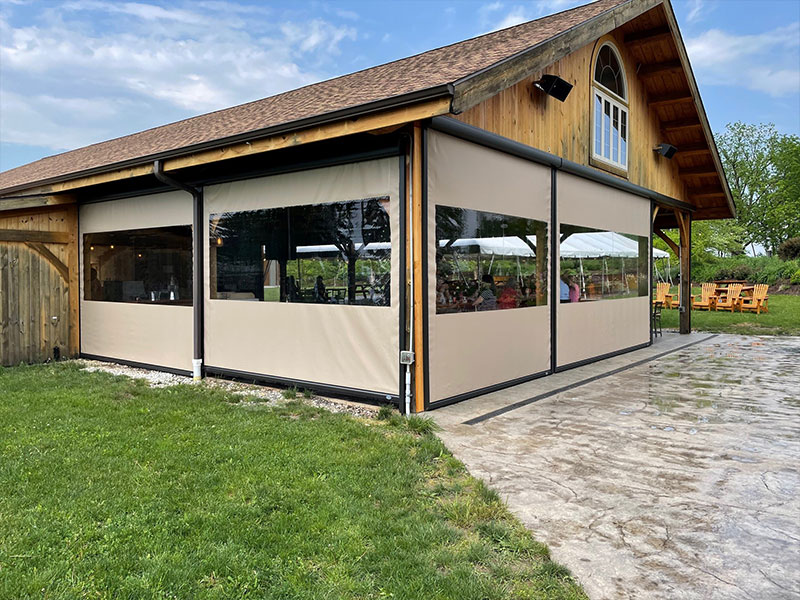
How Retractable Patio Screens Provide Wind Protection Without Blocking the Outdoors
Motorized retractable screens create a flexible barrier that can soften breezes and reduce wind-driven debris while still allowing light, visibility, and varying levels of airflow. How open the patio feels depends largely on the screen fabric selected.
Phantom Screens explains that open-weave meshes allow greater airflow, while tighter weaves provide greater protection. Its motorized screen lineup illustrates how much fabrics can vary, with listed insect meshes ranging from 42% to 56% openness. In other words, homeowners can select a screen based on the balance of protection and openness they want.
How Do Motorized Screens Reduce Wind on a Patio?
Motorized screens reduce wind by placing a permeable barrier between the breeze and the occupied patio area. Instead of creating the fully solid barrier of glass or a wall, mesh allows some air to pass through while disrupting direct gusts.
This can make a noticeable difference when wind would otherwise blow across a covered patio, disturb table settings, move lightweight furnishings, or carry leaves and debris into the space.
The amount of protection depends on several factors:
- Mesh density: Tighter fabrics generally provide more protection, while more open meshes maximize airflow.
- Screen placement: Screening the side or sides that receive prevailing winds can improve comfort.
- Track design: A secure retention system helps keep fabric stable when wind puts pressure on it.
- Opening size: Large openings place different loads on a screen than smaller patio bays.
- Wind conditions: Retractable comfort screens have operating limits and should not automatically be treated as storm protection.
The goal is not necessarily to eliminate every breeze. For many patios, reducing direct gusts while retaining gentle airflow provides the best balance.
Will Wind-Blocking Screens Make My Patio Feel Enclosed?
Not necessarily. Mesh selection allows homeowners to maintain visibility and airflow while gaining protection from outdoor conditions.
A high-openness insect mesh can provide a particularly airy feel. A denser solar fabric can offer more shade, privacy, and wind reduction, but it may create a greater sense of separation from the surrounding yard.
This flexibility is one of the main differences between motorized screens and permanent patio enclosures. When the weather is pleasant and screening is unnecessary, the screens can retract into their housings. The patio returns to its fully open configuration without permanent walls obstructing the view.
For homeowners who enjoy an open-air setting but want more control over changing conditions, that retractability can be especially valuable.
Which Screen Mesh Is Best for Wind and Airflow?
The best screen is the one that balances your priorities rather than simply providing the maximum amount of wind blockage.
For example, Progressive Screens identifies solar screens as suitable for wind, shade, heat, and privacy, while its insect screens are designed to maximize airflow while keeping pests out. The manufacturer says its solar mesh options can block 70% to 97% of UV rays, depending on the material.
When selecting a screen, consider what bothers you most on your patio:
- Primarily wind: Consider a tighter solar fabric or another material designed for increased weather protection.
- Wind plus insects: Look for durable insect mesh that offers a balance of airflow and wind reduction.
- Sun and afternoon heat: Solar mesh may provide the most versatile combination of shade, UV protection, and wind filtering.
- Maximum openness: Choose a more open mesh that prioritizes airflow and visibility.
There is no single mesh that is ideal for every outdoor space. Professional guidance can help prevent choosing a fabric that is either more restrictive or more open than your patio needs.
Why Does the Track System Matter in Windy Conditions?
The track system matters because wind pressure acts on the entire screen surface. A well-engineered retention system helps keep the fabric controlled and properly tensioned as conditions change.
Progressive Screens, for example, says its MagnaTrack system is designed to flex under wind pressure and then use magnetic tension to adjust the screen after pressure subsides. The manufacturer also lists self-adjusting sidetracks and a weighted bottom bar among features intended to improve performance in windy conditions.
This is important because wind resistance involves more than selecting a strong fabric. The screen, tracks, housing, bottom bar, mounting surface, and installation all work together as a system.
Homeowners should also distinguish everyday wind management from severe-weather protection. Manufacturer limits vary considerably. Phantom Screens, for example, advises that its motorized screens should not be operated in winds above 25 mph and recommends retracting them in windy conditions. Always follow the operating limits for the specific system installed on your patio.
Can Motorized Screens Make a Patio More Usable?
Yes. By giving homeowners more control over wind, insects, sunlight, and debris, motorized screens can extend the range of conditions in which a covered patio feels comfortable.
That can be useful for outdoor dining, entertaining, relaxing, or simply keeping furniture and décor from being constantly exposed to blowing leaves and debris. When conditions improve, the screens retract so you can enjoy the completely open patio again.
The result is not a permanently enclosed room. It is an outdoor space that can adapt throughout the day.
Frequently Asked Questions About Motorized Patio Screens and Wind
Do motorized patio screens completely stop wind?
No. Mesh screens typically filter and reduce the impact of wind rather than creating an airtight barrier. The amount of wind reduction depends on fabric density, installation, screen position, and weather conditions.
Can you see through wind-resistant patio screens?
Yes, many outdoor screen fabrics maintain substantial outward visibility. More open meshes generally provide greater visibility and airflow, while tighter solar fabrics offer increased shade, privacy, and weather protection.
Should motorized patio screens stay down during strong winds?
Only if the specific screen system is designed and rated for those conditions. Wind limits vary by manufacturer and product, so homeowners should follow the manufacturer’s operating instructions and retract standard screens when conditions exceed their rating.
Are motorized screens better than enclosing a patio?
They serve a different purpose. Permanent enclosures provide continuous separation from outdoor conditions, while motorized screens offer adjustable protection and can disappear when an unobstructed open-air patio is preferred.
Enjoy the Breeze Without Putting Up With Every Gust
Motorized patio screens offer a practical middle ground between a completely exposed patio and a permanent enclosure. With the right combination of mesh, track system, placement, and professional installation, you can reduce uncomfortable wind while maintaining the light, views, ventilation, and outdoor character that make a patio enjoyable.
Ready to make your patio more comfortable without closing it in? Contact Hester Designs to explore motorized patio screen options designed around your outdoor space.